
The Lantern of the Laughless Saint Island
The Lantern of the Laughless Saint Island is the open world: a remote ancient land reached through a shared nightmare and crowned by a silent Tower.
The island is the open world of The Lantern of the Laughless Saint. It is a remote, ancient land reached through a shared nightmare and crowned by a silent Tower, and nearly everything in the game — exploration, quests, choices, and their consequences — happens on it. Rather than following a checklist of quest markers, the game expects you to learn the island by walking it, following rumors, reading fragments of burned history, and meeting the other lost inhabitants who arrived the same way you did. Official region names are not confirmed and remain TBC until live-build verification.

Official announcement trailer by NerveLabs on YouTube, included as a visual introduction to the island and Tower premise.
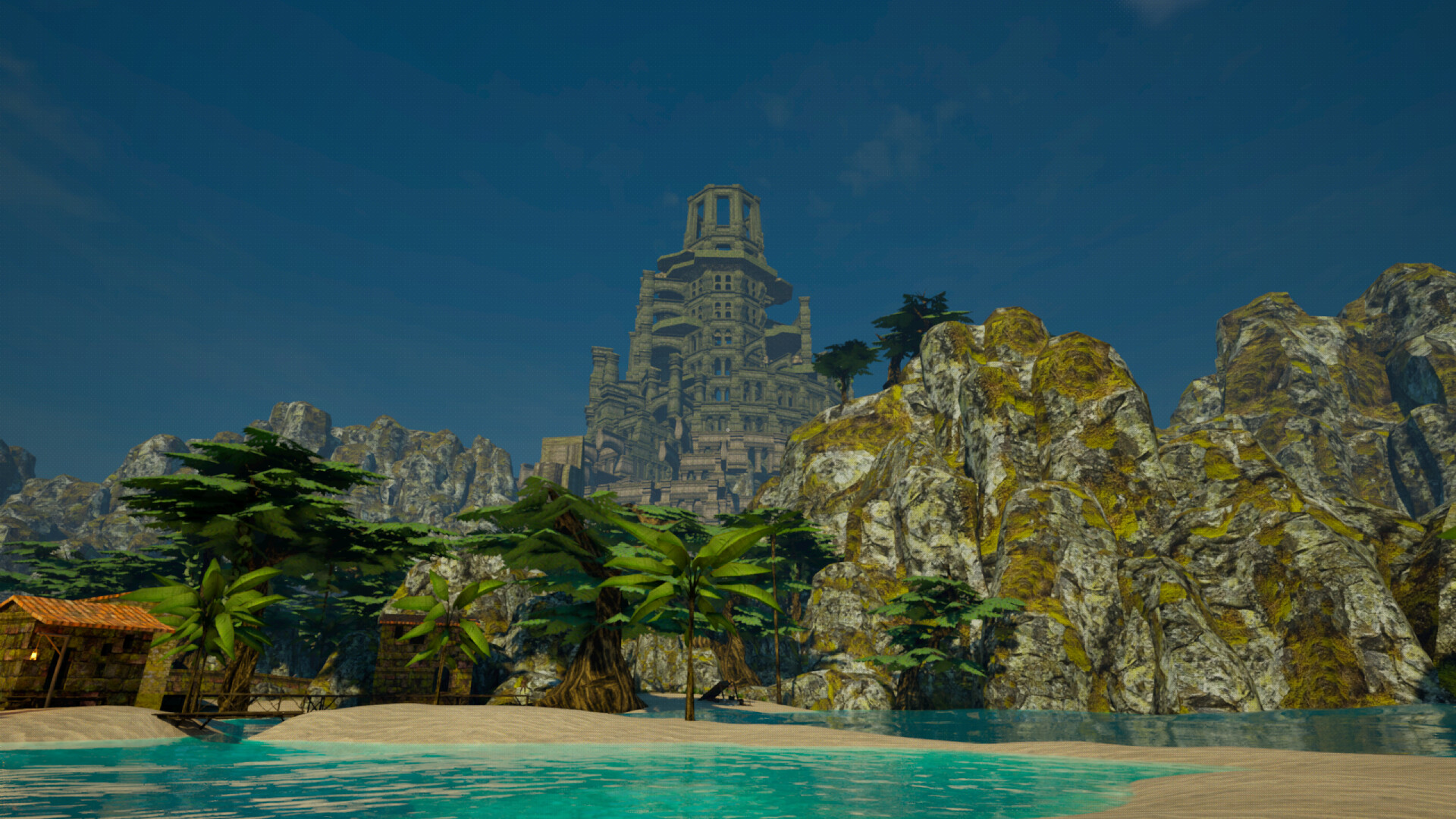
Authorized Steam store media showing the island and Tower setting. Open the official Steam source.
Arriving Through a Shared Nightmare
Everyone who reaches the island arrives the same way: they wake from the same dream and end up on the same boat. The game’s trailer describes it directly — “You wake from the same dream” — and adds that some come chasing miracles, some come running from their lives, and most don’t even know why they walked onto the boat. Those castaways are the island’s population of lost inhabitants, and their shared origin is one of the first things the world teaches you.
The shared nightmare is more than atmosphere: it is the hook that drags people to the island and keeps them there. Early alpha footage shows characters talking about the Tower they have seen in their dreams and the thing that calls them, and about trying to leave but being pulled back. The vision of the Tower is common to everyone, which is why so many islanders are preoccupied with it.
This shared arrival explains why the island feels like a community of castaways rather than a settled nation. Everyone is in the same situation, and everyone is trying to make sense of the same calling. For more on how the island, the Tower, and the Amphitheater fit together as a world, see the world overview.
The Silent Tower as the Island’s Anchor
The Tower is the island’s defining landmark: a silent structure that crowns the land and is visible as the destination nearly everything points toward. It is the major landmark of the island, the reference every traveler uses to orient themselves. The official materials describe it as silent, which matches the way it waits rather than announces itself.
Most routes and rumors eventually lead toward the Tower, and the game expects alternate approaches and shortcuts rather than one obvious route into it. The alpha playtest shows characters making a run for the Tower while others watch them go and predict their fate, which reinforces how central the structure is to daily life. There is no single sanctioned path, and finding your own way in is part of the point.
The practical side of reaching and entering the Tower — entrances, shortcuts, and the routes around it — is covered on the map page. Exactly how many floors the Tower has and what waits inside remain TBC until live-build verification.
Learning the Island by Walking
The core loop of the island is learning it through walking, landmarks, rumors, NPC stories, environmental clues, and repeated visits. There is no assumption that a map marker will tell you where to go next; the world itself is the interface. This is the Morrowind-inspired, player-directed structure the developers describe: walking the land, following rumors, reading fragments of history, and discovering people and places without a modern checklist-style quest flow.
Every excursion is a chance to add to your mental map. A landmark you pass early becomes meaningful later, and a rumor you hear in one town points somewhere you have never been. The game rewards paying attention to the world rather than to a compass.
This exploration-first philosophy shapes the whole game, from combat to magic to co-op. If you want the wider picture of how movement, quests, and systems work together, the gameplay guide is the place to start.
Rumors as Your Compass
Rumors are one of the island’s primary navigational tools, and tracking them is listed among the early priorities for new players. They arrive through NPC conversations, town life, and the stories people tell about the places around them. A rumor can point you toward a settlement, a hidden shortcut, or a quest you would never find by walking in a straight line.
Because rumors come from people, the island’s characters are the key to its geography. Talking to everyone is a legitimate strategy, and the same NPC can send you to different places depending on what you know and what you ask. The NPCs page covers who lives here and how they fit into the world.
Rumors also change as the world changes. Routes shift, characters move, and new information surfaces after events unfold, so yesterday’s rumor may be today’s dead end. Re-checking what you have heard is part of the exploration loop.
Revisiting Areas with New Tools
Repeated visits are an expected part of exploring the island, not a sign that you missed something the first time. As you gain new traversal tools and abilities, areas that were previously out of reach open up, and routes you dismissed become viable. The game is designed around this: you will return to early regions with later capabilities and find them changed.
This creates a rhythm of discovery where the island reveals itself in layers. The first visit shows you the surface; the second visit, with a new tool or a new rumor, shows you what was hiding underneath. Alternate approaches matter here as much as they do around the Tower.
Side stories are central to this layered exploration rather than optional filler. They feed rumors, unlock new tools, and deepen your understanding of the island, and their outcomes connect directly to the Amphitheater, where how you treat people becomes visible.
Side Stories Are Central
The island’s side stories are treated as central to understanding the world, not as optional content to clear for completion. Following them is how you learn the island’s history, its burned past, and the fates of the people around you. Each side story is a piece of the whole, and skipping them means exploring a world you do not fully understand.
These stories are also where the island’s consequence systems bite. How you treat an NPC during a side story can determine who — or what — eventually occupies a seat in the Amphitheater, so the choices you make in small quests echo into the finale. For the full picture of that system, see the Amphitheater page.
Exploring for its own sake is rewarded, and the game trusts you to find meaning in what you discover. The island does not explain itself; it waits to be read, and the more you walk it, the more it gives back.
Region Names: TBC until live-build verification
No official region names for the island have been published, and the names you see anywhere else should be treated as unverified. The only concrete place references available so far come from alpha playtest footage — such as the settlement of Magda’s Rest and the ruins of Saffron — and those are observations of an early build, not confirmed launch facts.
The wiki plans to fill the map page with verified records after Early Access: complete region names, coordinates or map markers, Tower entrances, shortcuts, NPC locations, quests, items, and secrets. Until that data exists, everything about the island’s official geography is TBC.
Until then, the island is its own map. Walk it, listen to rumors, revisit what you thought you knew, and treat every side story as a door. That is how The Lantern of the Laughless Saint expects you to learn its open world.